



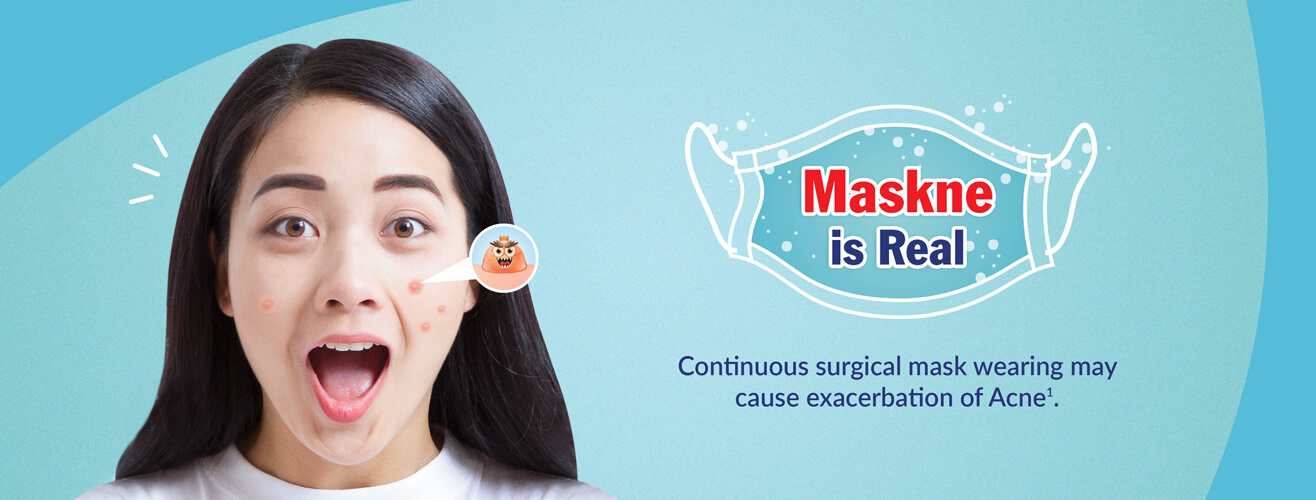
Maskne – Surgical Mask Induced Acne Outbreak.
In light of the recent global pandemic, we are compelled to change in our lifestyle and daily living. Wearing a face mask is the new norm, hoping to reduce the chances of spreading and contracting COVID-19 disease. In the midst of protecting yourself, you may realize that you have to deal with an outbreak of your own – acne outbreak, or other skin issues!
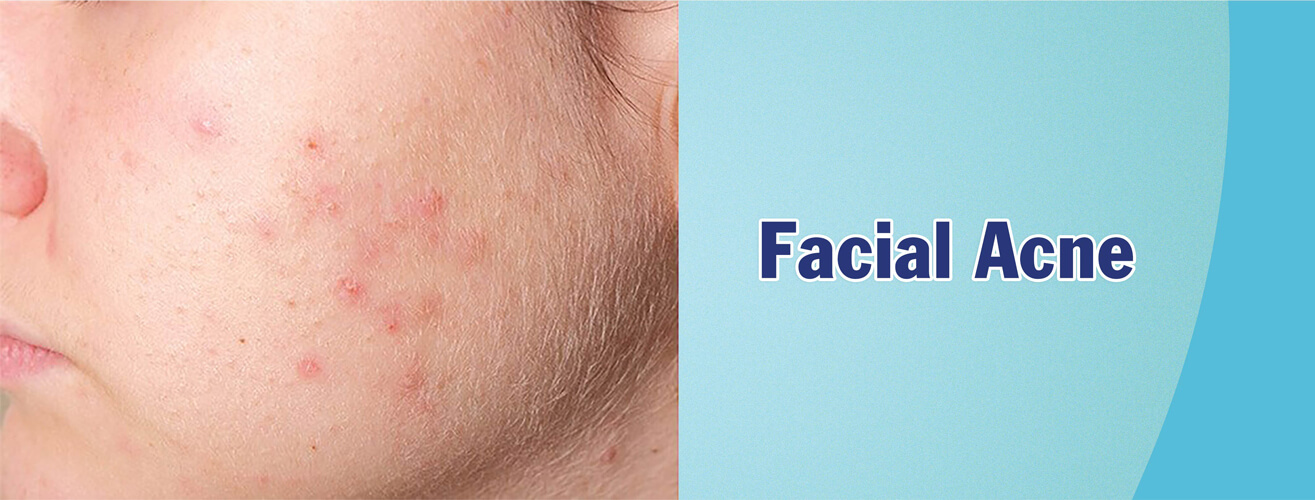
Facial acne
Acne breakout is the most prevalent side effect of wearing face masks. This is because constant rubbing and friction between the skin and the mask can irritate 1-3. In women, the use of makeup around the mask area also contributes to the clogging of pores. These areas may be also sweaty and moist which optimizes the proliferation of bacteria leading to the formation of acne4,5. If the condition is left untreated, this could lead to infections that require medical treatment.

Acne Rosacea
Acne rosacea is facial flushing and redness on the nose and cheeks. Small blood vessels on your nose and cheeks become visible and may develop pimples. It can be painful and is associated with flushing episodes8. Stress on skin and trap heat from the face mask can cause flaring of acne rosacea.
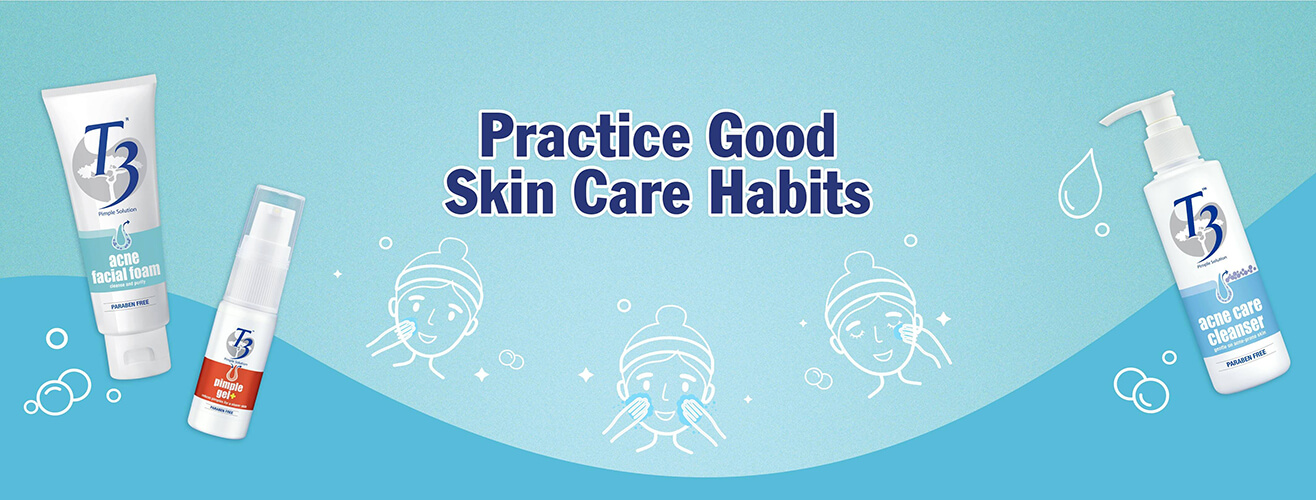 Tips to prevent and treat maskne
1. Maintain clean and healthy skin.
Use a gentle cleanser that is fragrance and alcohol-free which protects the skin from irritation and dryness.
2. Protect your skin barrier.
Apply regularly during day and night, especially before wearing a mask. A good skin barrier can prevent your skin from being exposed to the heat and moisture liberated from wearing a surgical mask.
3. Use spot correctors.
Apply spot correctors that contain drying agents: tea tree oil, benzoyl peroxide cream, salicylic acid-based products and antibiotics cream or gel such as clindamycin.
4. Use retinoic acid products.
Apply retinoic acid product such as topical retinoids at night for effective acne treatment. Adapalene gel or tretinoin cream products1 may also be used as part of acne treatment.
5. Limit the usage of makeup products.
Only use suitable makeup products. Avoid using an excessive amount of different makeup products, especially if they are comedogenic. Comedogenic products will clog the pores on the skin which causes the formation of acne. This condition may worsen in addition to the trapped heat and moisture from the mask.
6. Off with the mask!
Reduce outdoor activities to minimize the need to wear a surgical mask. Only go out when it is necessary. Stay at home and always practice good social distancing.
As for frontliners, staying at home and avoid wearing masks and personal protective equipments (PPEs) may not be applicable, so practice the key tips outlined before and after wearing mask and PPEs to maintain healthy skin.
Prepared by,
Dr Liyana Dhamirah Aminuddin
Clinical Specialist Dermatology
MB BcH BaO (Ireland)
MRCP (United Kingdom)
Masters of Science in Healthy Aging, Medical Aesthetic and Regenerative Medicine UCS
Reference:
1. Degitz, K., Placzek, M., Borelli, C. and Plewig, G., 2007. Pathophysiology of acne. JDDG, 5(4), pp.316-323.
2. Prinzivalli, L., 2020. How To Care For Your Skin If You Wear PPE At Work. [online] Allure. Available at: <https://www.allure.com/story/ppe-face-mask-skin-care-guide> [Accessed 6 May 2020].
3. Graham-Brown, R. and Burns, T., 2011. Dermatology.. 10th ed. Chichester: Wiley-Blackwell, pp.54-55.
4. Schwartz, R. and Micali, G., 2013. Acne. Gurgaon: Macmillan Medical Communications, pp.3-6
5. Mills, O., 1975. Acne Mechanica. Archives of Dermatology, 111(4), p.481.
6. Stokowski, L., 2020. A Step-By-Step Guide To Preventing PPE-Related Skin Damage. [online] <https://www.medscape.com/viewarticle/929590#vp_3> [Accessed 6 May 2020].
7. Basler RS. Acne mechanica in athletes. Cutis. 1992;50(2):125-8.
8. Blount BW, Pelletier AL. Rosacea: a common, yet commonly overlooked, condition. Am Fam Physician. 2002;66(3):435-40.